
Too many facilities delay buying proper lockout tagout kits because they assume “best price” means “lowest cost.” That mindset leads to compromised safety, non-compliance, and avoidable downtime. The truth? The best price isn’t about the cheapest sticker—it’s about value: durability, compliance coverage, ease of use, and versatility across equipment types.
When you invest in the right lockout tagout (LOTO) kit at the right price, you’re not just satisfying OSHA requirements—you’re preventing accidents, protecting maintenance teams, and streamlining shutdown procedures. This guide cuts through the noise to show you where to find high-performance LOTO kits without overpaying.
What Makes a Lockout Tagout Kit Worth the Investment?
Before chasing discounts, understand what components define a reliable LOTO kit. A quality kit should cover mechanical, electrical, pneumatic, hydraulic, and chemical energy sources. Generic kits may include only a few padlocks and tags, leaving you exposed during complex maintenance.
A comprehensive LOTO kit typically includes: - Lockout hasps and cable locks - Valve lockouts (ball, gate, and needle types) - Circuit breaker lockouts - Plug lockouts and outlet covers - Danger tags with writable surfaces - Personnel locks (brass or steel shackle) - Storage case (wall mount or portable)
The best-priced kits balance completeness with adaptability. For example, a plant with mixed machinery needs modular components, not just a one-size-fits-all bundle.
Real-World Example: A Midwest manufacturing plant bought the cheapest kit online—$38 with five padlocks and generic tags. Within three months, two cable locks failed during a hydraulic press lockout. The repair cost: $2,400 in downtime and replacement parts. A slightly more expensive, industrial-grade kit would have prevented the incident.
Top 5 Lockout Tagout Kits That Deliver Value and Competitive Pricing
Below are five standout lockout tagout kits that offer strong features at competitive price points. All are OSHA-compliant and built for real-world use.
| Kit Name | Key Features | Price Range | Best For |
|---|---|---|---|
| Grace Industries Master LOTO Kit | 39-piece, includes breaker, valve, and disconnect lockouts; durable poly case | $149–$169 | Mid-sized facilities with diverse equipment |
| Safeguard Industries SG-260 Combo Kit | 26-piece, ANSI-compliant tags, 6 personalized locks, universal valve adaptors | $130–$150 | Teams needing standardized tagging |
| Justrite 20600 Complete Kit | Heavy-duty steel storage box, 40 components, padlock rack | $180–$200 | High-traffic environments |
| Seton 60056-4 Lockout Station Kit | Wall-mount station, 50-piece, includes group lockout hasp | $165–$175 | Shift-based maintenance crews |
| Master Lock 1420KIT | Compact, 20-piece, color-coded tags, OSHA-aligned | $99–$115 | Small workshops or mobile teams |
These kits represent the optimal blend of price and functionality. The Master Lock 1420KIT, for instance, is often on sale at safety supply retailers—dropping to $89 during industry promotions. That’s enterprise-level compliance at small business pricing.
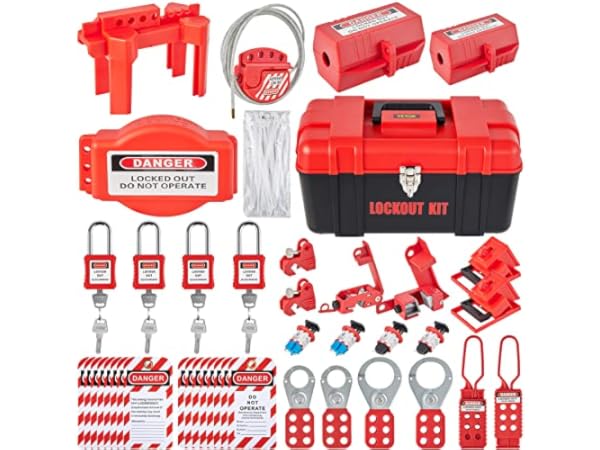
Warning: Avoid no-name kits on e-commerce platforms that claim “equivalent to Grace Industries.” Many use brittle plastic components that crack under temperature stress or fail under pressure.
Where to Buy Lockout Tagout Kits for the Best Price
Pricing fluctuates significantly based on vendor, volume, and packaging. Here’s where to shop smart:
1. Safety Supply Distributors (Grainger, Seton, Cole-Parmer) These offer bulk discounts (5–15% off for orders over $500) and frequent promotions. Grainger’s loyalty program can shave 10% off repeat purchases. However, list prices are often inflated—always ask for a quote.
2. Amazon Business Great for smaller kits and fast shipping. The Master Lock 1420KIT often runs $15–$20 below retail. Watch for counterfeit sellers—check seller ratings and product authenticity seals.
3. Manufacturer Direct (Grace Industries, Safeguard) Buying direct eliminates distributor markups. Grace Industries offers free shipping on orders over $100 and PDF compliance checklists with every kit. Ideal for larger facilities standardizing across multiple sites.
4. Industrial Auctions & Refurbished Markets Refurbished Justrite or Seton kits can cost 30–40% less. Verify refurbishment standards—some vendors replace worn parts and re-certify. Avoid used kits from unverified sources; compromised locks are a liability.
Pro Tip: Time your purchases around Q4. Many distributors clear inventory before year-end, offering discounts up to 25% on LOTO gear.
Hidden Costs That Inflate the “Best Price”
The cheapest kit on paper often becomes the most expensive over time. Watch for these hidden cost drivers:
- Replacement Parts: Some brands make you buy proprietary locks or tags. Opt for kits using standard padlocks (like Master Lock #3) for easy, low-cost replacements.
- Training Overhead: If a kit lacks intuitive labeling or modular design, your team spends extra time learning it. Look for kits with color-coded components and quick-reference guides.
- Non-Compliance Fines: OSHA fines for inadequate energy control average $15,625 per violation. A $100 kit that doesn’t cover all energy points isn’t a deal—it’s a risk.
Common Mistake: A food processing plant bought a $75 kit online with plastic pipe lockouts. During a cleaning shutdown, a technician couldn’t secure a steam line—leading to a scalding incident. The resulting fine and medical costs exceeded $90,000. The proper kit would have cost $160.
How to Customize Your Kit for Maximum Value
Pre-assembled kits are convenient, but they often include redundant items or miss critical components for your operation. A better strategy: build or modify a kit tailored to your site.
- Step-by-Step Customization:
- Audit all energy sources in your facility (electrical panels, pneumatic valves, conveyor disconnects).
- Identify lockout points—how many locks per machine? What types?
- Start with a mid-tier base kit (e.g., Safeguard SG-260), then add specialty items.
- Use universal adapters (like adjustable valve lockouts) to reduce part count.
- Label all components and train staff on usage.

Example: A packaging line with 12 machines needed 48 lockout points. A pre-built 50-piece kit cost $170. By purchasing a $120 base kit and adding $30 in cable locks and breaker adapters, the facility saved $20 and eliminated unused components.
This approach transforms “best price” from a passive search into active cost optimization.
Why Bulk Purchasing Isn’t Always Better
Buying multiple kits at once seems cost-effective—until you realize not every department has the same needs. Overstocking leads to: - Unused components gathering dust - Inconsistent implementation across teams - Difficulty tracking kit revisions during audits
Instead, adopt a phased rollout: - Buy one pilot kit, test it across departments - Gather technician feedback - Adjust the configuration before bulk ordering
Some vendors offer “kit evaluation programs” where you return the demo kit for credit toward a full order. This reduces risk and ensures long-term value.
Your Next Move: Balance Compliance, Usability, and Cost
The best lockout tagout kit at the best price isn’t the cheapest online find or the most expensive industrial model. It’s the one that fits your operational needs, withstands daily use, and keeps workers safe without draining the safety budget.
Start by defining your lockout scope. Then compare kits not by price tag, but by: - Coverage of energy types - Component durability - Vendor support and replacement availability - Inclusion of OSHA-aligned tags and documentation
When you align those factors, the real “best price” becomes clear—not as a number, but as long-term value.
Purchase with purpose. Protect with precision.
Frequently Asked Questions
What is the average cost of a quality lockout tagout kit? Most reliable kits range from $130 to $180. Budget options under $100 often lack critical components or durability.
Are cheaper LOTO kits OSHA compliant? Not necessarily. OSHA compliance depends on proper application, not price. Many low-cost kits omit required elements like group lockout hasps or durable tags.
Can I mix and match lockout components from different brands? Yes, as long as they’re compatible (e.g., padlock shackle fits the hasp). Stick to standard sizes for easier integration.
Do LOTO kits include tags and tag blanks? Most do, but check the specs. Some include 10–15 tags; others offer reusable vinyl tags with write-on surfaces.
How many padlocks should a standard LOTO kit have? Minimum of 6–8 for group lockout procedures. Larger facilities may need 10+ locks per kit.
Is it better to buy individual components or a pre-assembled kit? Pre-assembled kits save time, but custom builds offer better fit and cost control. Use a hybrid approach: base kit + targeted add-ons.
Where can I get replacement tags and locks? Reputable suppliers like Grainger, Seton, and the original manufacturer offer replacements. Keep spare tags and locks on hand to avoid downtime.
FAQ
What should you look for in Best Lockout Tagout Kits at the Lowest Prices? Focus on relevance, practical value, and how well the solution matches real user intent.
Is Best Lockout Tagout Kits at the Lowest Prices suitable for beginners? That depends on the workflow, but a clear step-by-step approach usually makes it easier to start.
How do you compare options around Best Lockout Tagout Kits at the Lowest Prices? Compare features, trust signals, limitations, pricing, and ease of implementation.
What mistakes should you avoid? Avoid generic choices, weak validation, and decisions based only on marketing claims.
What is the next best step? Shortlist the most relevant options, validate them quickly, and refine from real-world results.


